


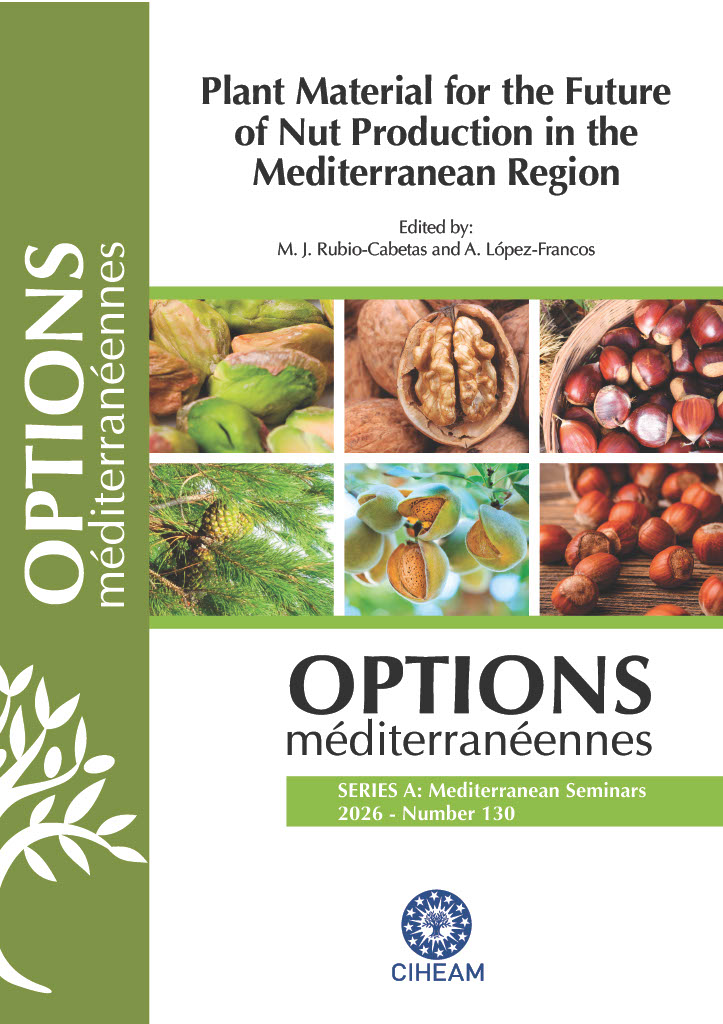
OM A130
Plant Material for the Future of Nut Production in the Mediterranean Region
- [ Télécharger ]
- [ Exporter la citation ]
Vous pouvez télécharger la citation au format :
- [ Imprimer ]
Résumé
The global consumption of nuts is increasing due to their nutritional value, health benefits, and versatility. Traditional nuts in the Mediterranean region include almonds, chestnuts, hazelnuts, walnuts, pistachios and pine nuts, while pecan is emerging as a promising crop. Although Mediterranean countries account for around half of the global cultivation area of these species, they produce only about a quarter of the world's output. Despite favourable climatic conditions and the global importance of some Mediterranean countries for specific crops, there is considerable scope to improve yields by introducing better varieties and more advanced cultivation and post-harvest practices. In particular, the sustainability of nut production will depend on conserving and using genetic resources alongside breeding, biotechnology and genomic tools to develop resilient, high-yielding cultivars that can withstand climate change, pests, diseases and evolving market demands. The International Seminar 'Plant Material for the Future of Nut Production in the Mediterranean Region' was organised by CIHEAM Zaragoza and the Agri-Food Research and Technology Centre of Aragon (CITA) on 25–26 September 2024. The seminar brought together 45 experts on the seven species from Algeria, France, Italy, Hungary, Morocco, Portugal, Spain, Tunisia and Turkey. The experts assessed the current situation of plant material, existing collections, genetic technologies, breeding and conservation strategies, and the main research, innovation and transfer needs to support the development and use of more suitable plant materials. This edition of Options Méditerranéennes contains reports on the seven species (almond, chestnut, hazelnut, pecan, stone pine, pistachio and walnut), which were prepared by experts invited to the seminar. Each report provides an overview of the situation and needs of plant materials and their conservation and improvement in the main Mediterranean producing countries.